Ayurvedic Oil Massage for Pain Relief: A How-To Guide
Ayurvedic oil massage is the practice of applying warm, herb-infused oil with slow, deliberate strokes to ease muscle tightness and joint stiffness. This guide covers how to choose an oil, how to heat it safely, a simple self-massage routine for back, knee and leg pain, and what the evidence does and doesn’t support.
- Gentle, warming technique
- Safe self-massage steps
- Honest about the evidence
What Ayurvedic oil massage involves
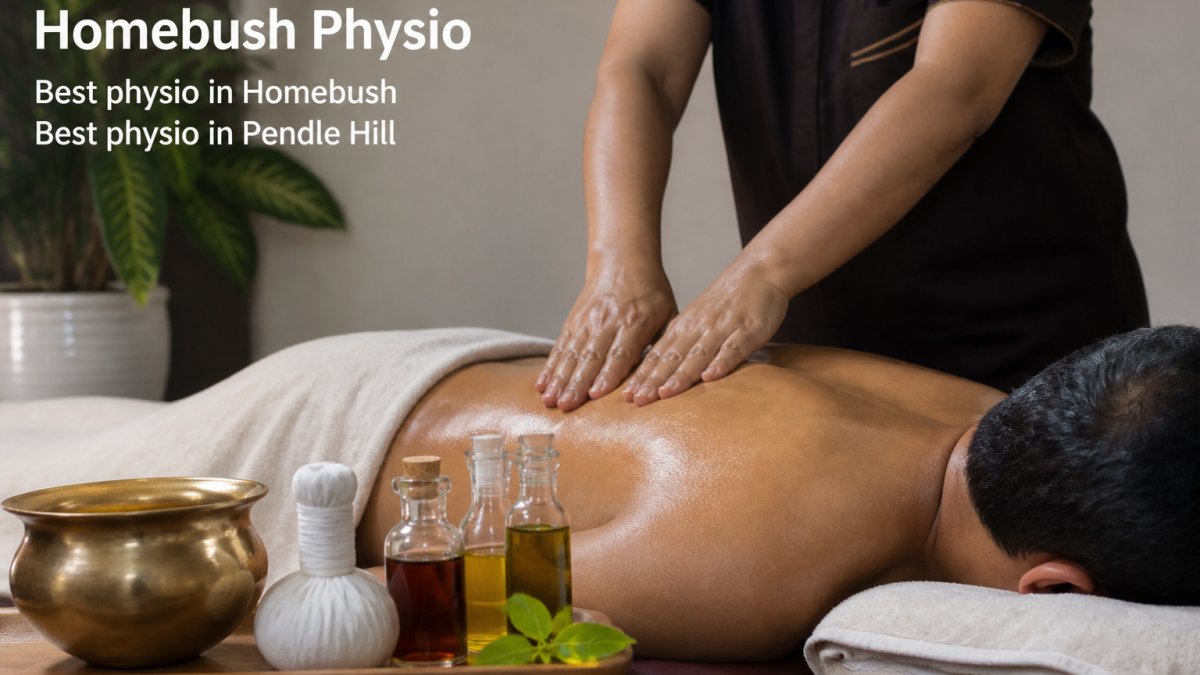
It isn’t a deep-tissue sports massage. The pressure is gentler, the pace is slower, and the goal is to soothe rather than push through pain. A typical session follows a simple rhythm:
- A brief check of where it hurts and how the joint moves
- Warming the oil to a comfortable skin temperature
- Long, gliding strokes along the muscles
Most people describe it as warm and calming rather than intense. The oil stays on the skin, so wear something you don’t mind marking.
Hopevana’s own oil. In clinic we use a traditional Ayurvedic oil specially made in India. It isn’t sold over the counter, and it’s available only to Hopevana patients, applied warm during manual therapy and physiotherapy sessions.
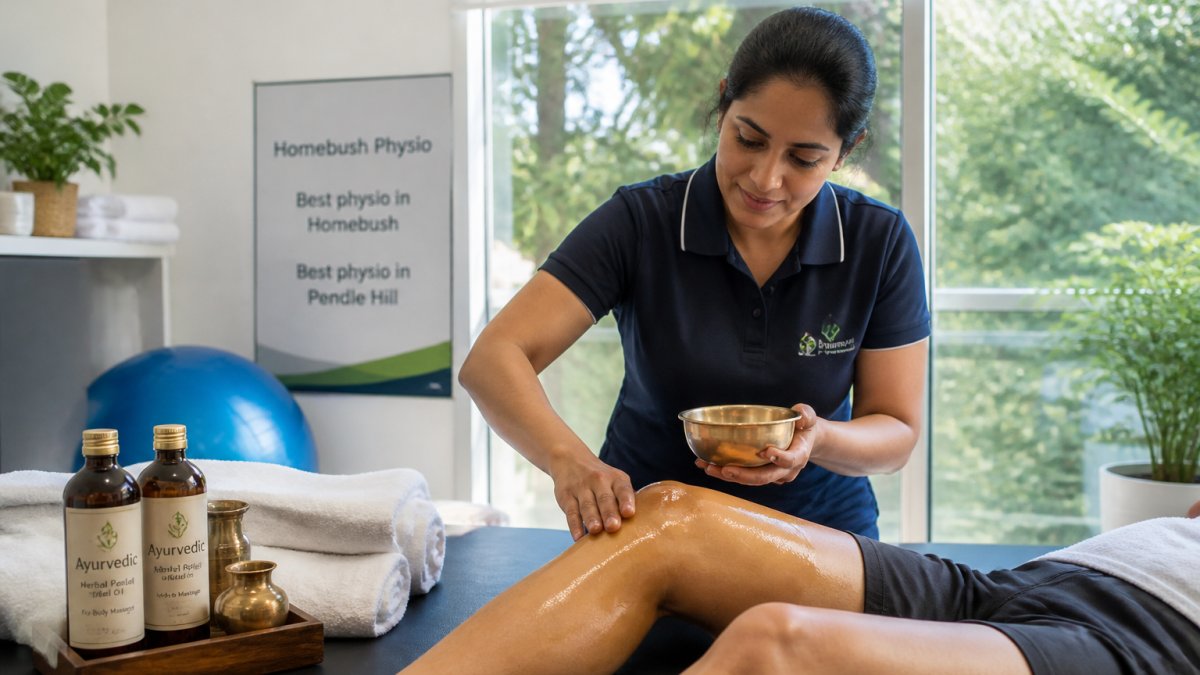
Choosing an Ayurvedic oil for joint pain
The right oil depends less on the brand and more on three things: the base oil, the herbs infused into it, and how your skin responds. A short, named ingredient list beats a long, vague one.
Base oils
- Sesame: the classic Ayurvedic base. Heavy, warming and slow to absorb. Suits stiff, cold-feeling joints. Not ideal with active eczema or very sensitive skin.
- Coconut: lighter, cooling and quicker to absorb. Suits warm weather, oily skin or joints that feel warm.
- Sunflower or mustard: lighter again. Mustard oil has a strong scent and can irritate sensitive skin, so patch test first.
Herbs commonly infused
- Eucalyptus: a cooling-then-warming feel. Better for muscle soreness than deep joint pain.
- Wintergreen: contains a natural salicylate. Don’t use it if you take blood thinners, or on broken skin, without checking with your GP or pharmacist.
- Camphor: strongly warming and easy to overdo. Use small amounts, never on large areas, and keep it away from young children.
Tip: a strong smell doesn’t mean a stronger effect. It usually means added fragrance, which sore skin doesn’t need. If the label just says “herbal blend”, keep looking.
How to heat oil safely
Most of the benefit comes from warmth, touch and relaxation. Oil that’s too hot will burn, and you may not notice until it’s too late.
Pour a small amount into a bowl
Only what you need for one session.
Stand the bowl in warm water
A minute or two is enough. Never heat oil in a microwave.
Test a drop on your inner wrist
If it feels hot, wait. If it feels comfortably warm, it’s ready.
Self-massage for back, knee and leg pain
Allow 10 to 15 minutes somewhere warm, with a towel underneath you.
- Start wide: flat palms around the sore spot, not on it
- One direction: stroke towards the heart, not back and forth
- Slow down near joints: small, light circles
- Keep it comfortable: if you’re tensing up, you’re pressing too hard
- Finish gently, then pat off excess oil and wash your hands
| Area | Stroke | Pressure | Time |
|---|---|---|---|
| Lower back | Flat palm, upward | Light | 3–4 min |
| Knee | Small circles | Very light | 2–3 min |
| Calf | Long upward sweeps | Medium | 2–3 min |
| Thigh | Broad strokes | Medium | 2–3 min |
With sciatica, keep pressure light along the back of the leg and stop if you feel tingling or shooting pain.
Safety: patch test first
Apply a little oil to your inner forearm and wait 24 hours. If you see redness, itching or swelling, don’t use that oil. Don’t massage over:
- Broken, sunburned or infected skin
- A hot, swollen or red joint
- A recent injury or bruise
Watch out: massaging a hot, swollen joint can make inflammation worse. Stop and get advice if pain increases, you feel dizzy, or a new symptom appears. Oiled skin is slippery, so take care getting up.
What the evidence says
Reasonably supported
Massage can give short-term relief of soreness and stiffness, and help relaxation and sleep.
Not established
That one oil outperforms another, or that oil massage changes the course of arthritis or an inflammatory condition.
Realistic expectations
Looser muscles for a few hours to a couple of days. A comfort tool alongside exercise and care, not a cure.
Traditional use tells us an oil has been used for a long time. It doesn’t tell us how well it works compared with other options. If you’ve used oil massage for several weeks and the pain is unchanged or worse, that points to a different approach rather than a stronger oil. For Australian context, see the AIHW reports on musculoskeletal conditions and Cochrane’s review of massage for neck pain.
When to see a physio instead
Book an assessment if any of these apply:
- Pain lasting more than a few weeks
- Numbness, tingling or weakness
- Pain after a fall or accident
- A joint that locks, gives way or swells
A physio can work out what’s driving the pain and show you which strokes suit your problem, so your home routine actually helps. At Hopevana we combine warm-oil manual therapy with NeuroKinetic Therapy, fascia work and exercise, at our Homebush and Pendle Hill clinics. We also offer remedial massage, bulk billing for eligible GP care plan referrals, NDIS home visits and WorkCover and CTP direct billing.
Related reading: How to manage chronic pain long term · Back pain treatment · Knee pain treatment
Frequently asked questions
Can Ayurvedic oil massage help with muscle or joint pain?
Massage can ease short-term stiffness and soreness and help you relax, and warm oil adds a soothing, lubricating layer. Treat it as a comfort measure alongside assessment and exercise, not a replacement for treating an underlying injury. If pain is severe, lasting or getting worse, see a physiotherapist or GP.
What oil does Hopevana use?
We use a traditional Ayurvedic oil specially made in India. It isn’t sold over the counter and is available only to Hopevana patients, applied warm during manual therapy and physiotherapy sessions.
Which oil is best for leg pain?
The evidence doesn’t rank one oil above another. How you use it matters more: a small amount, slightly warmed, with slow upward strokes towards the heart. Choose a plain carrier oil for sensitive skin, and patch test any medicated oil first.
Are there risks with Ayurvedic massage oils?
Yes. Some herbal ingredients irritate skin, so patch test for 24 hours first. Don’t massage over broken skin, bruises, hot swollen joints or numb areas, or if you have a fever or a suspected clot. Wintergreen contains a salicylate, so check with your GP or pharmacist if you take blood thinners. If you’re pregnant or managing a long-term condition, ask your GP or physio first.
How is warm oil used in a physiotherapy session?
Warm oil reduces friction during manual therapy, so the physio can work through tight tissue around a joint or muscle. It’s one part of a plan that also includes assessment, targeted exercise and advice on load and movement.
Try warm-oil manual therapy at Hopevana
Using our own Ayurvedic oil, available only to Hopevana patients. Clinics in Homebush and Pendle Hill.