
Are Home Visit Physiotherapy Sessions Worth It?
Home Visits · Is It Worth It?
A home visit is worth it when getting to the clinic is the thing standing between you and finishing your rehab. It is not worth it when your recovery needs equipment that lives in a clinic. That one distinction answers the question for most people — here is how to work out which side you are on.
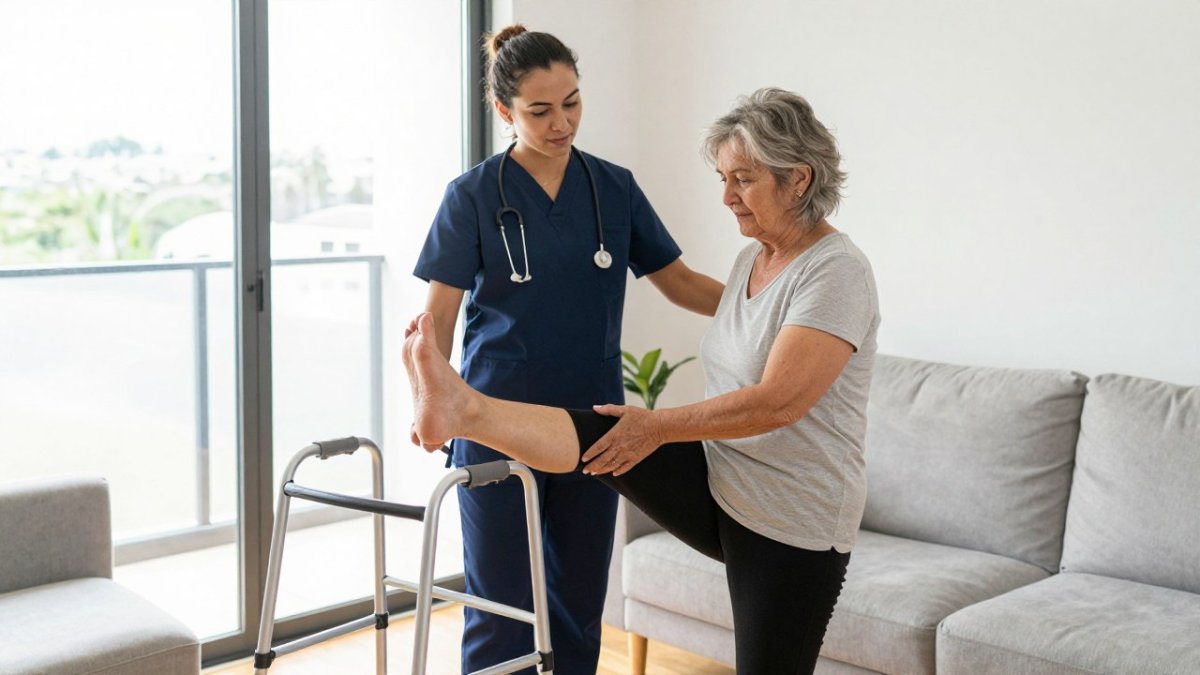
Home physio vs clinic physio: the honest comparison
| Factor | Home visit | Clinic |
|---|---|---|
| Travel | None — the biggest single advantage | You travel, park, and travel back |
| Equipment | What we bring, plus what you own | Full gym, treadmill, shockwave, traction |
| Environment assessment | Your actual steps, bathroom, bed and chairs | Described, not observed |
| Energy cost to you | Low — all of it goes into the session | Travel can consume what you needed for therapy |
| Carer involvement | Easy — they are already there | Requires them to attend separately |
| Session length | Typically an hour for a first visit | Usually 30–45 minutes |
When a home visit is clearly the better choice
Travel is the barrier
If arranging a lift, a taxi or community transport is the hardest part of attending, removing it is the single biggest thing that improves whether rehab actually gets finished.
The first weeks after hospital
Post-surgical and post-discharge rehab matters most early and is hardest to attend early. Home visits bridge exactly that gap.
Falls, balance and transfers
These are environment problems. Assessing them where they happen finds hazards and solutions a clinic room cannot.
Fatigue-limited conditions
If your energy budget is finite, spending it on travel rather than treatment is a poor trade.
When a clinic will do more for you
Be wary of anyone who tells you home visits are always better. If your program needs progressive resistance equipment, a treadmill for gait retraining, shockwave therapy for a stubborn tendon, or traction, a clinic session will achieve more in the same hour. Strength work in particular hits a ceiling fast with bands and bodyweight alone.
Plenty of people use both: clinic sessions for the loading work, home visits when travel is not realistic. That is usually the strongest combination rather than a compromise.
What a home visit actually costs
For most funded patients, nothing. Under NDIS, WorkCover, CTP and DVA, home-based physiotherapy is billed to the scheme with no gap to you. Provider travel for NDIS participants is claimable within the limits set in the NDIS Pricing Arrangements and Price Limits, and it should be confirmed with you before the first visit rather than appearing on an invoice afterwards.
Privately, a travel component may apply depending on distance. Medicare chronic condition management referrals are usually written for clinic-based care, so check with your GP before assuming a home visit is covered under yours.
What you get in the hour
The question to ask yourself
Not “is a home visit better?” but “what is most likely to stop me finishing this program?” If the answer involves getting there, book the home visit. If the answer is that you need more load than a lounge room allows, book the clinic. If you are not sure, say what you are working towards when you call and we will tell you honestly which setting suits.
The best rehab plan is the one you complete. An excellent clinic program you attend half the time produces less than a good home program you finish.
Arranging a visit
For what to have ready and how booking works, see how to book mobile physiotherapy. NDIS participants will find the funding detail in NDIS home visit physiotherapy, and our coverage is set out in mobile physiotherapy in Western Sydney. Clinic appointments are at Homebush and Pendle Hill. If falls are the concern, start with balance assessment.
Frequently Asked Questions
Is home visit physiotherapy as effective as clinic physiotherapy?
For assessment, hands-on treatment, balance work and function-based rehab, yes — and the home environment assessment is an advantage a clinic cannot match. For programs that need gym equipment or machine-based resistance, a clinic does more in the same session.
Does a home visit cost more?
Under NDIS, WorkCover, CTP and DVA there is no gap to you. Privately a travel component may apply depending on distance, which is confirmed before booking.
How long does a home visit take?
Around an hour for a first assessment. Follow-up visits are usually shorter, depending on what your program involves.
Do I need to prepare anything?
Enough clear floor space to move and lie down, comfortable clothing, your shoes if walking is part of your goals, and any referral or claim paperwork. Nothing needs to be bought or rearranged.
Can I switch between home visits and clinic appointments?
Yes, and many people do. Home visits during the hardest weeks, clinic sessions once travel is manageable and the program needs more equipment.
Can I use a Medicare referral for a home visit?
Medicare chronic condition management referrals are generally written for clinic-based treatment. Check with your GP first, as the referral may need to specify home-based care.
Not sure which suits you?
Call and describe the situation — we will tell you straight.