
Is Manual Therapy Safe for Seniors? A Guide
Is manual therapy safe for seniors? For most older adults, yes. The key isn’t avoiding hands-on treatment as you age, it’s matching the technique to the person: your bone density, your medications, your balance and your history. This guide explains what’s involved, which situations need extra care, and how to prepare for a first appointment.
- Gentlest effective technique
- Paired with strength & balance
- Medicare & home visits
Why manual therapy suits seniors
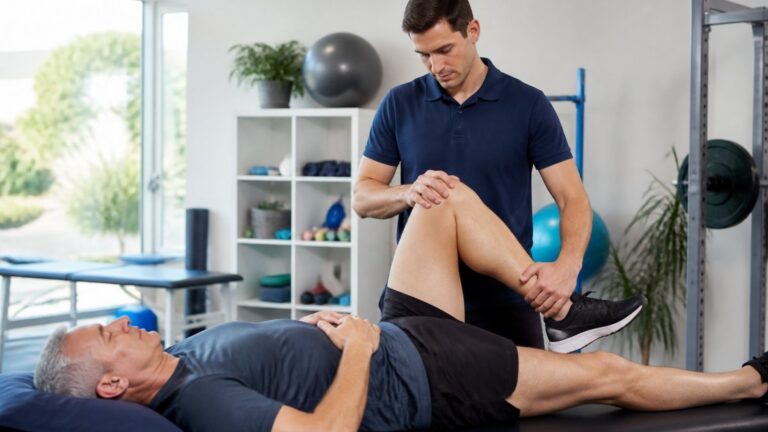
Age brings changes: joints stiffen, muscles lose some strength, balance can slip. A physiotherapist assesses those changes, then chooses from a set of hands-on methods and adjusts them for you. Safety starts with that assessment, which covers your history, your medications and how your joints respond before any treatment is chosen.

Types of manual therapy in physiotherapy, from gentlest up
Soft tissue work
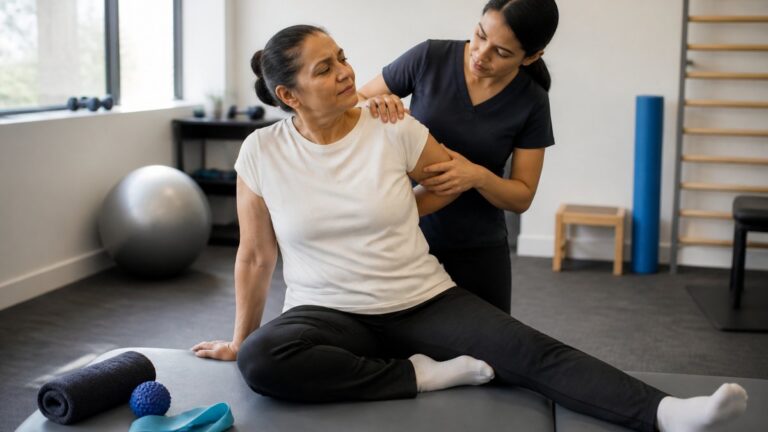
Slow hands-on work on tight muscles and connective tissue. The mildest option and usually the starting point.
Joint mobilisation
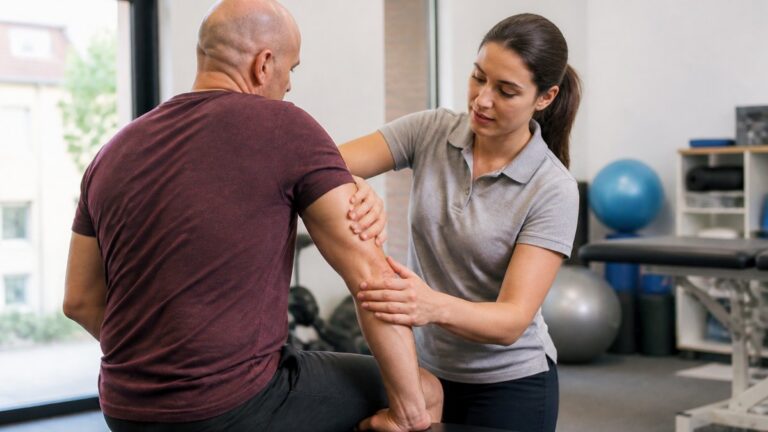
Gentle, controlled movement of a joint within its comfortable range. Low-risk for most older adults.
Manipulation
A small, quick movement that can produce a click. More forceful, offered only to selected patients after a full assessment.
At Hopevana we also use NeuroKinetic Therapy to find weak links in how you move, and warm-oil manual therapy for stiff, achy joints.
Manual therapy risks and precautions for seniors
Osteoporosis or low bone density
Forceful manipulation and strong pressure raise fracture risk. Gentle mobilisation and light soft tissue work instead.
Blood thinners
Warfarin, apixaban, rivaroxaban, clopidogrel: higher bruising and bleeding risk. Deep tissue work is moderated. Always tell us.
Recent surgery or joint replacement
Treatment follows your surgeon’s timeline and precautions. We liaise with their protocol if needed.
Infection, fever or acute flare
Treatment waits until the acute phase passes.
Dizziness, vertigo or unsteady balance
Certain neck techniques and position changes are avoided; positioning is adjusted.
Frailty or several conditions
Shorter, gentler sessions rather than a standard block.
Red flag: any provider who offers forceful manipulation without first asking about your history, medications and bone health. A safe practitioner welcomes the question “which technique, and why?”
Warning signs to stop and seek advice
- Sharp or worsening pain during a technique, rather than a tolerable stretch
- New numbness, tingling or weakness in an arm or leg
- Dizziness, nausea or visual changes during or after treatment
- Significant swelling or bruising, or a feeling that something isn’t right
- Any fall or near-fall during or after a session
These are uncommon, but they matter. Mild soreness for a day or so is normal; recovery should trend towards easier movement and less pain over sessions.
Physiotherapy for seniors: mobility and balance
Manual therapy eases pain and frees stiff joints. The lasting gains come from strength and balance training built into your plan. Hands-on work makes the exercise possible; the exercise keeps you steady on your feet and lowers your fall risk.
Preparing for your first appointment
Bring your referral and funding details
GP referral and Medicare card for a care plan, or your claim number for WorkCover or CTP.
Bring a full medication list
Prescription, over-the-counter and supplements. Blood thinners, blood pressure and diabetes medicines matter most.
Note your history
Past fractures, falls, joint replacements, surgeries, and diagnoses such as osteoporosis, arthritis or Parkinson’s.
Be honest about the awkward details
Dizziness, fear of falling and bladder habits all change which positions and techniques are safe.
Paying for it
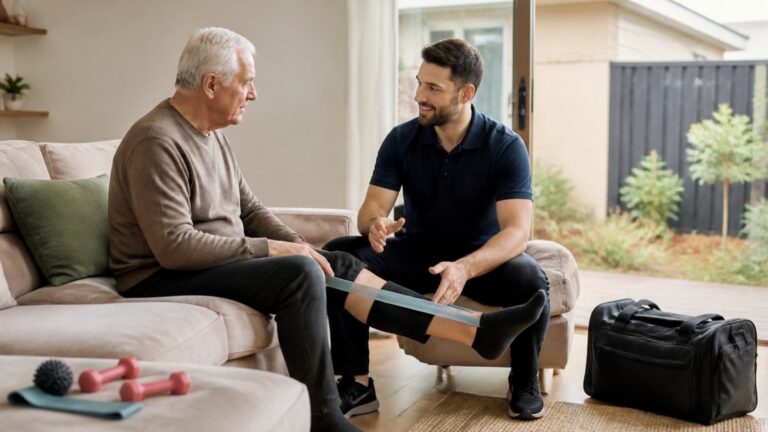
If your GP sets up a chronic condition management plan, Medicare covers up to five allied health sessions a calendar year, and Hopevana bulk bills eligible referrals. WorkCover and CTP claims are billed directly to the insurer. If travel is hard, we’re NDIS-registered and offer home visits across Western Sydney. Our clinics are in Homebush and Pendle Hill, with Saturday morning appointments at both.
Related reading: Manual therapy and arthritis · Medicare care plan guide · Managing chronic pain
Frequently asked questions
Is manual therapy safe for older adults with arthritis or osteoporosis?
Often yes, after an individual assessment. Gentle mobilisation and soft tissue work are usually better tolerated than forceful manipulation. Tell your physio about osteoporosis, steroid use or falls, because these change which techniques are suitable.
Can manual therapy cause side effects in older adults?
Mild soreness, tiredness or stiffness for a day or two is common and settles. Serious problems are uncommon but possible with forceful manipulation in people with fragile bones or bleeding disorders. Seek urgent advice for severe pain, swelling, numbness or loss of function after a session.
What types of manual therapy might a physio use?
Soft tissue massage, joint mobilisation, stretching and, for selected patients, manipulation. For older adults the gentler options are usually combined with strength and balance exercise.
Can Medicare cover physiotherapy for seniors?
Yes, through a GP chronic condition management plan: up to five allied health sessions per calendar year. Hopevana bulk bills eligible referrals, and WorkCover or CTP claims are billed directly to the insurer.
Is manual therapy safe for seniors who live alone or can’t travel?
Yes, with the same assessment. We offer NDIS home visits across Western Sydney, and for other seniors our Homebush and Pendle Hill clinics both have step-free access and parking.
Physiotherapy for seniors in Homebush and Pendle Hill
Physiotherapy for older adults in Homebush and Pendle Hill. Medicare bulk billing for eligible referrals.
General information, not a substitute for individual assessment. Medicare rules per MBS item 10960.