7 Physiotherapy Steps for Seniors Balance Improvement
Older Adults · Balance & Falls
Balance is trainable at any age. It is not a fixed trait that declines on a schedule — it is a skill built from leg strength, joint position sense, vision and reaction time, and every one of those responds to the right kind of practice.
Why balance declines
Several systems contribute, and they tend to fade quietly rather than all at once. Leg and hip strength reduce with inactivity. The position sense in ankles and knees becomes less precise. Vision changes. Reaction time slows. Medications can add dizziness or lightheadedness on standing.
Most people notice none of this until something forces the issue — a stumble on a kerb, or the realisation that getting out of a low chair now takes a push with both arms.
What actually improves balance
The research here is unusually consistent, and it points away from the things people often try first.
| Approach | Effect on balance and falls |
|---|---|
| Challenging balance exercise, done regularly | The strongest single factor — the exercise must be hard enough to feel unsteady while remaining safe |
| Progressive leg strength work | Strong supporting evidence, particularly for sit-to-stand and stair capacity |
| Walking alone | Good for general health, limited effect on balance specifically |
| Seated exercise only | Useful starting point, but does not train standing balance |
| Home hazard changes | Helpful alongside exercise, especially for those at higher risk |
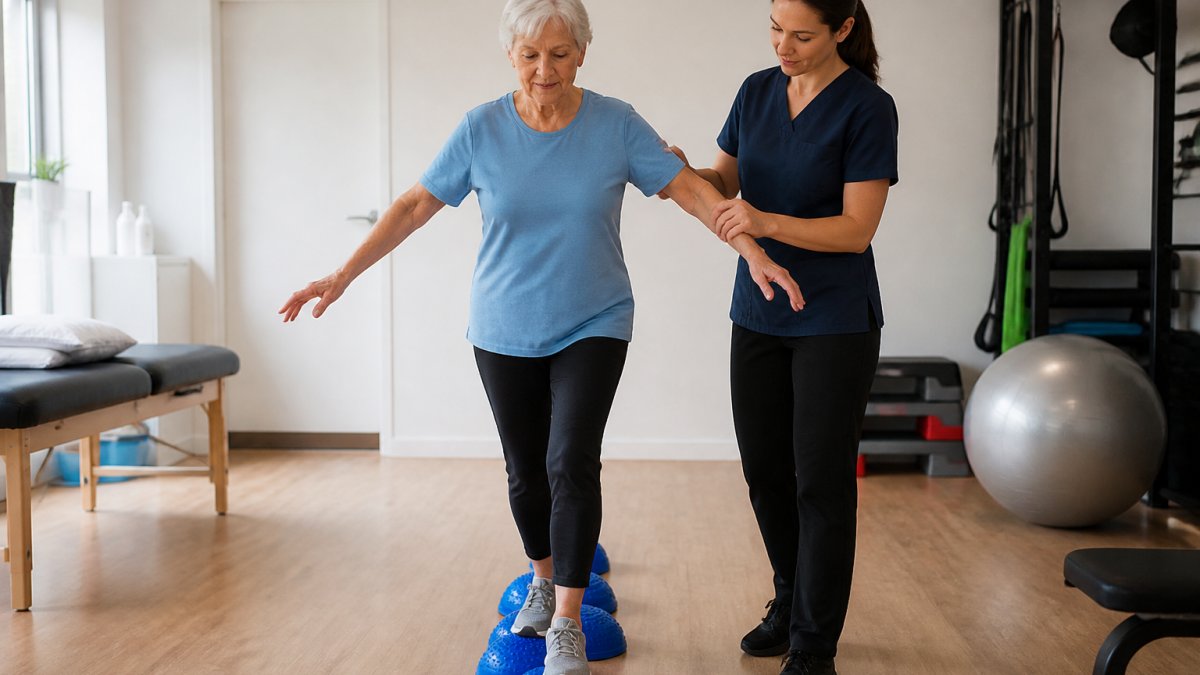
The key detail is challenge. Balance improves when the system is asked to work near its limit — narrowing your base of support, reducing hand support, moving your head while standing. Comfortable exercise maintains; challenging exercise improves.
What an assessment covers
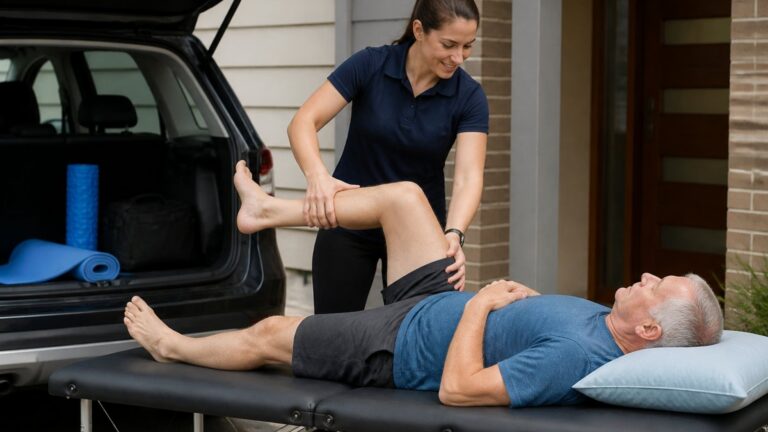
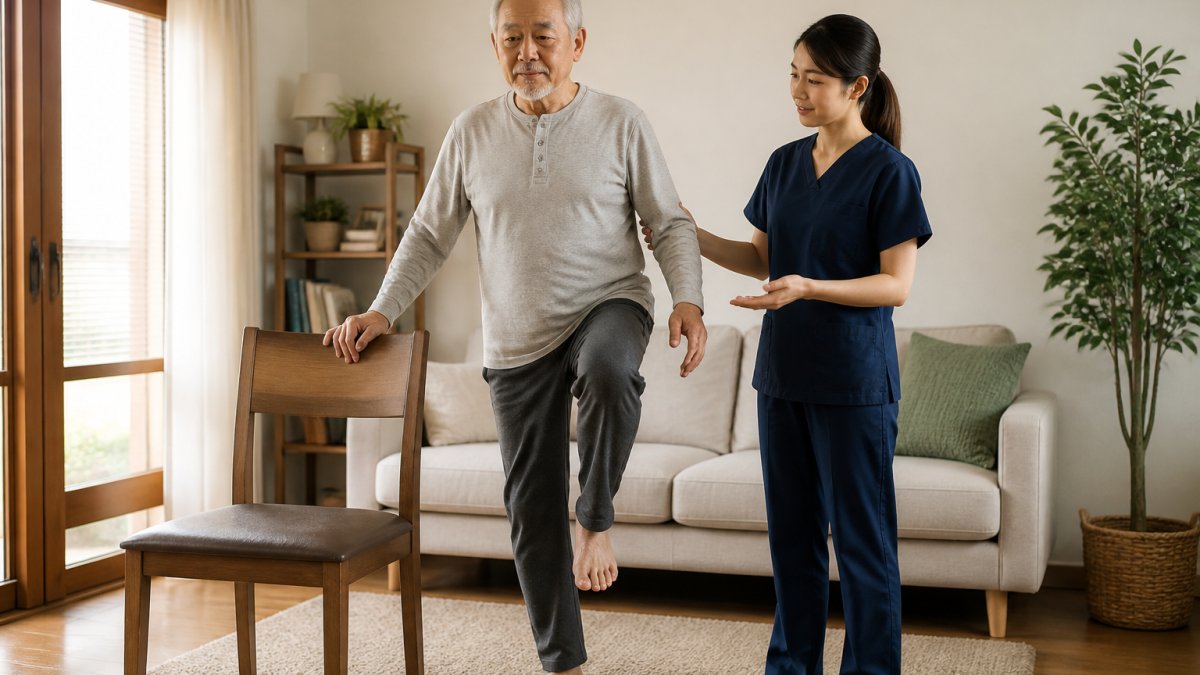
Done as a home visit, the assessment also covers the environment itself — lighting, rugs, steps, bathroom layout and the chairs and bed you use daily.
Worth raising with your doctor
Some contributors to unsteadiness are medical rather than musculoskeletal. Dizziness on standing, several medications taken together, poor vision, foot pain or numbness, and conditions affecting the inner ear all affect balance and need the right person looking at them. A fall with loss of consciousness, or one you cannot explain, should always be reviewed medically.
A near-miss counts. People tend to report only falls that caused injury. Catching yourself on furniture is the same signal and a much better time to act.
Starting safely
Balance work should feel challenging, not frightening. Train within reach of a bench or solid chair, use it as little as you can manage, and progress by reducing support rather than by moving to harder-looking exercises. Little and often beats one long weekly session — a few minutes most days produces more change than an hour once a week.
Where to start
Assessment is available at Homebush and Pendle Hill, or as a home visit, which is often the better choice for a first falls assessment. If joint pain is limiting what you can do, see manual therapy for older adults. NDIS participants can read about home visits under a plan.
Frequently Asked Questions
Can balance really improve after 70?
Yes. Balance responds to training at any age because it depends on strength, position sense and reaction time, all of which adapt to practice. The exercise has to be genuinely challenging to produce change.
How often should I do balance exercises?
Short sessions most days work better than one long weekly session. A few minutes of challenging practice daily produces more change than an hour once a week.
Is walking enough?
Walking is valuable for general health but has limited effect on balance specifically, because it does not challenge the system near its limit. It works best combined with dedicated balance and leg strength work.
What if I am afraid of falling during the exercises?
That is common and the program should account for it. Exercises are set up within reach of solid support and progressed by gradually reducing that support, so the challenge increases without the fear.
Should I see my GP as well?
Yes, particularly if you feel dizzy on standing, take several medications, have had a vision change, or have had a fall you cannot explain. Those contributors need medical review alongside the exercise program.
Can this be done at home?
Yes, and for a first falls assessment it is often better, because the environment you move through every day can be assessed at the same time.
Book a balance and falls assessment
Clinic or home visit across Sydney.