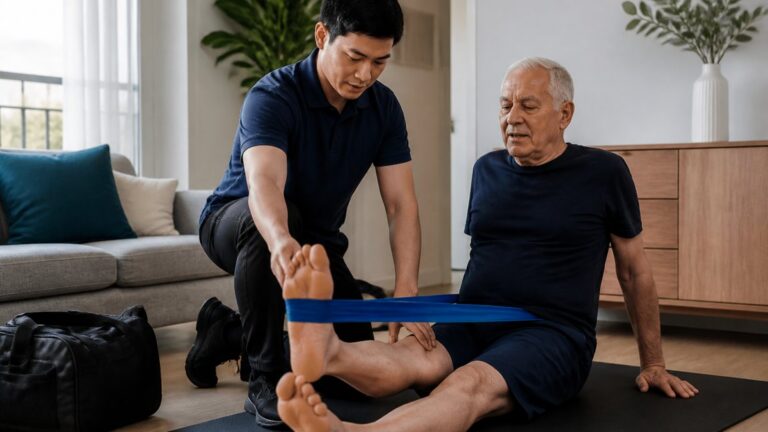

How Do You Manage Chronic Back Pain?
Chronic back pain is rarely fixed by one treatment. It’s managed with a plan. The people who do best aren’t the ones who find a magic stretch. They move a little every day, pace their activity, know exactly what to do in a flare-up, and get the right help when progress stalls. This guide gives you that plan.
- A daily back routine
- A written flare-up plan
- When to see a physio or GP
What chronic back pain actually is
Back pain becomes “chronic” when it lasts 12 weeks or longer, beyond the time tissues normally take to heal. By then the pain is rarely about one damaged structure. The nervous system has often become sensitised, staying on alert long after the original trigger has settled, so the back can hurt without being harmed.
Hurt doesn’t always mean harm. The World Health Organization’s guideline on chronic low back pain puts non-surgical care at the centre, with education, structured exercise programs, some hands-on therapies and psychological approaches among its recommended options.

How long does chronic back pain last?
There’s no fixed end date. Some people improve steadily over weeks or months; others still get flare-ups for years while living full, active lives. A better question is “what can I do this month that I couldn’t last month?” Most people move through four stages:
Settle and understand
Pain education and gentle movement. Progress looks like less fear and more confidence to move.
Rebuild
Supervised exercise, with hands-on treatment where it helps. Daily tasks start getting easier.
Strengthen
Strength, mobility and conditioning. Flare-ups get fewer and shorter.
Maintain
Your own routine, with check-ins as needed. You’re managing the back, not the other way round.
Your daily back routine
Most day-to-day relief comes from what you do between appointments. The aim isn’t zero pain; it’s a back that keeps moving and a nervous system that stays calm.
Move little and often
Walking or swimming most days. A short walk on a bad day beats a day in bed, which usually stiffens the back further.
Break up sitting
Stand or walk briefly every 30 minutes. Feet flat, hips slightly above knees, screen at eye level.
Lift smart
Hold the load close, bend at the hips and knees, and avoid twisting while you’re carrying weight.
Set up your sleep
Regular sleep and wake times. Many people are most comfortable on their side with a pillow between the knees.
Heat or cold for comfort
Whichever feels better. Wrap it in a towel, 15–20 minutes at a time. It eases movement; it doesn’t change the condition.
Pace, don’t push
Break jobs into blocks and stop while you still feel comfortable. It avoids the boom-and-bust cycle.
Chronic lower back pain exercises to start with
The type of exercise matters less than doing it consistently and progressing gradually. A common starting sequence:
- Walking: the foundation. Start with a distance you can repeat tomorrow.
- Pelvic tilts and knee rocks: gentle low-back movement lying down
- Glute bridges: hip and lower-back strength
- Bird-dog: trunk control and spinal stability
- Sit-to-stand: the movement you use all day, practised with control
Change one thing at a time: more reps, more load or longer duration, never all three at once. Some soreness that settles within a day or two is normal; sharp or spreading pain is a sign to scale back. A physiotherapist can set the starting point from your assessment.
Build your flare-up plan
Flare-ups happen even when you’re doing everything right. Having a plan written down before one hits takes the panic out of it, and panic tends to make pain feel worse.
| Do | Avoid |
|---|---|
| Cut activity by about half rather than stopping | Bed rest for more than a day or so |
| Keep walking in short blocks | Pushing through on painkillers, then crashing |
| Use heat or cold for comfort | Testing the back with the movement that set it off |
| Build back to your routine over a few days | Abandoning your exercises completely |
On medication: it helps some people, but make it a shared decision with your GP or pharmacist. Ask about the expected benefit, the risks, how long to take it, and what to do if it isn’t working.
Physiotherapy for chronic back pain: what to expect
A proper assessment
Your history, how you move, what your days look like and what you want to get back to.
Two or three functional goals
Things like walking to the shops, sitting through a meeting, or picking up your kids.
Supervised exercise you can repeat
Hands-on treatment can ease symptoms, but it works best alongside exercise, not instead of it.
Review, then hand over
Regular check-ins on your goals, building towards a routine you can run without us.
If function hasn’t improved after several weeks of consistent care, ask about a multidisciplinary approach: a pain specialist, a psychologist and an exercise professional working together. Our lower back pain physiotherapy page explains a course of treatment in more detail.
Who to see first
- Your GP if the pain is new, severe or you’re unsure. They screen for red flags, order imaging only if it would change management, and can set up a GP chronic condition management plan, which gives Medicare cover for up to five allied health sessions a calendar year (shared across all allied health).
- A physiotherapist if there are no red flags and you want to restore movement. You don’t need a referral to see a physio privately.
- A pain clinic if pain persists despite several months of good care, or is affecting work, sleep and mood.
- A psychologist alongside physical care. Stress, fear of movement and low mood all amplify persistent pain.
Get urgent care for loss of bladder or bowel control, numbness around the groin or inner thighs, leg weakness that’s getting worse, unexplained weight loss, fever, or pain after a significant fall or accident. These are uncommon, but they need same-day assessment.
Measuring progress without chasing zero
Track what you can do, not just how much it hurts: how far you can walk, how well you sleep, how many good days you string together, days at work. If those are trending up, the plan is working, even on days the pain is there. If stretching on your own has stopped helping, see when back pain needs a physio assessment.
Chronic back pain care at Hopevana
We bulk bill eligible GP chronic condition management plan referrals, provide NDIS home visits, and bill WorkCover and CTP insurers directly, so there’s nothing to pay upfront on those pathways. See us at Homebush, Pendle Hill or inside Pendle Hill Family Medical Practice.
Related reading: Managing chronic pain long term · What recovery looks like · WorkCover back injury guide · Medicare care plan guide
Frequently asked questions
How do you manage chronic back pain?
With a plan rather than a single fix: stay active every day, pace activity into manageable blocks, build strength gradually with exercise, have a written flare-up plan, and get physiotherapy or a multidisciplinary team involved when progress stalls.
What is the best treatment for chronic back pain?
There’s no single best treatment. Guidelines point to a combination: therapeutic exercise, education, hands-on treatment where it helps, psychological approaches such as cognitive behavioural therapy, and medication where appropriate. The common thread is staying active and progressing gradually.
What chronic lower back pain exercises should I start with?
Walking, then gentle movements such as pelvic tilts and knee rocks, building to glute bridges, bird-dog and sit-to-stand. Start at a level you can repeat tomorrow and change one thing at a time. A physiotherapist can tailor the starting point to you.
How long does chronic back pain last?
It’s defined by duration (12 weeks or more) rather than an end date. Many people improve with consistent self-management, exercise and physiotherapy, but timelines vary. Track what you can do day to day rather than waiting for a set date.
Should I keep moving if my back hurts?
In most cases, yes. Staying active and avoiding prolonged bed rest is a consistent recommendation in current guidance. In a flare-up, scale back by about half rather than stopping. If you have any red-flag symptoms, get checked before pushing on.
Does Medicare cover physio for chronic back pain?
If your GP sets up a GP chronic condition management plan and refers you, Medicare covers up to five allied health sessions per calendar year, shared across all allied health. Hopevana bulk bills eligible referrals.
Ready to build your back pain plan?
Physiotherapy in Homebush and Pendle Hill. Medicare bulk billing for eligible referrals, NDIS home visits, WorkCover and CTP billed direct.
Sources: WHO guideline on chronic primary low back pain · Review of clinical practice guidelines (2024) · Review of evidence-based interventions (2022). General information, not a substitute for individual assessment. Last checked 25 October 2026.